There’s a reason herringbone keeps stealing the show in home renovations: no other floor turns heads quite like it. It’s a pattern that was gracing European manor houses four hundred years ago — and yet somehow it looks completely at home in a modern open-plan kitchen. If you’ve been eyeing it up for your own home, this guide will walk you through everything worth knowing: what herringbone actually is, whether to go engineered or solid, which oak tones to choose, what it really costs, and how it’s fitted and looked after.
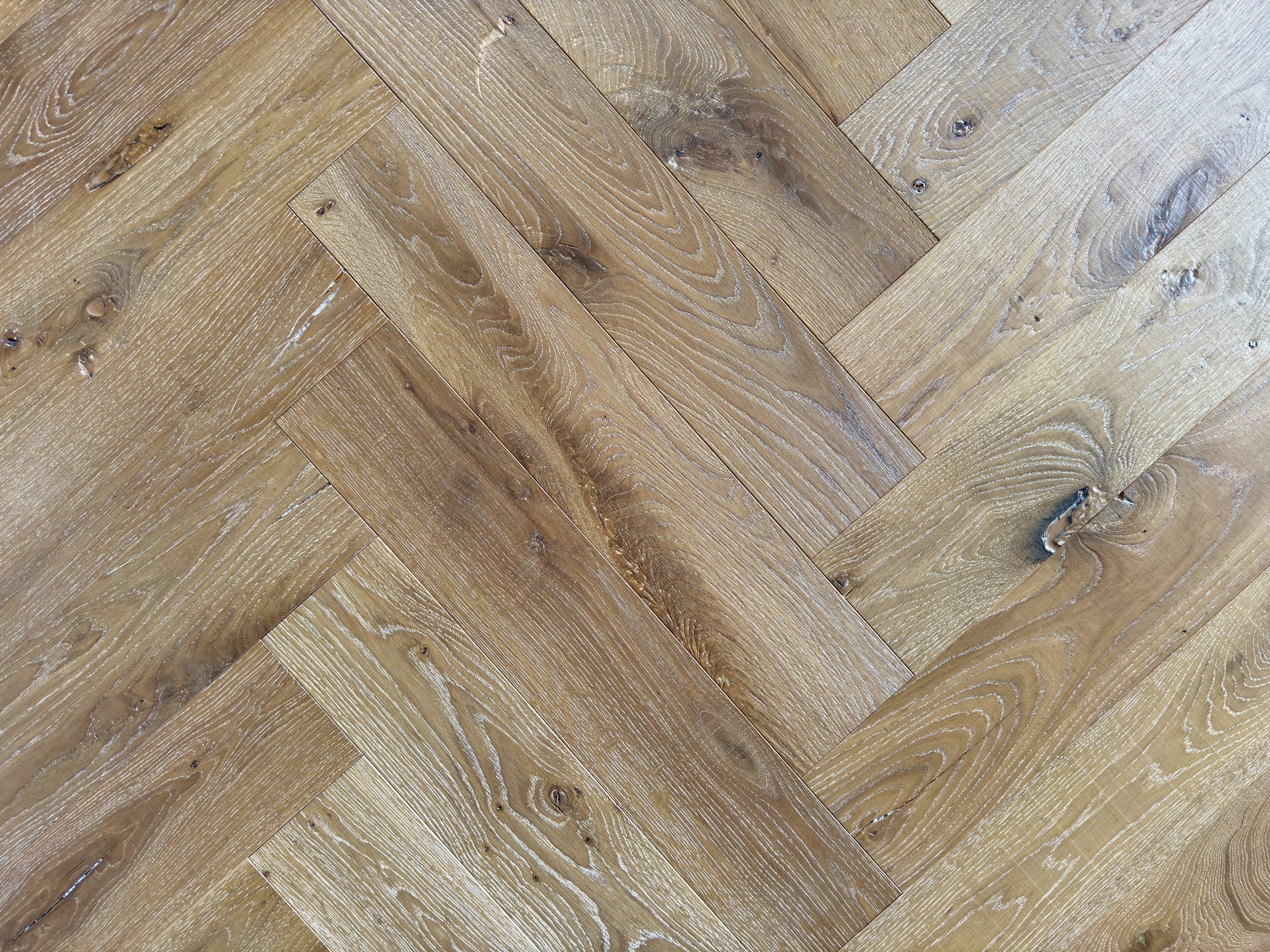
Picture rectangular wood blocks laid in a staggered zigzag, each one meeting its neighbour at a right angle. That’s herringbone — named, believe it or not, after the skeleton of a herring. The effect is a floor with genuine movement and rhythm, something flat planks simply can’t do.
People often mix it up with chevron, its close cousin. The difference is in the cut: chevron planks are trimmed at an angle so the rows meet in neat, continuous points, while herringbone keeps that classic broken zigzag. Both are beautiful — but herringbone remains the firm favourite in UK homes, and it’s the more forgiving of the two to fit.
Here’s where a little know-how saves a lot of heartache. Traditional herringbone was cut from solid hardwood blocks, and you can still buy it that way. But think about what a herringbone floor actually is: hundreds of small blocks, each one free to swell, shrink or cup as the seasons change. That’s a lot of tiny opportunities for trouble.
Engineered herringbone solves this elegantly — a genuine oak wear layer bonded to a multi-layer core that keeps every block rock-steady. In practice, that means:
Solid herringbone still earns its keep in period restorations, but for almost any modern project, engineered is the smarter buy. Weigh it up in full in our engineered vs solid oak comparison.
Oak is the classic herringbone choice, and it’s easy to see why — the grain gives every block its own character without upstaging the pattern itself.
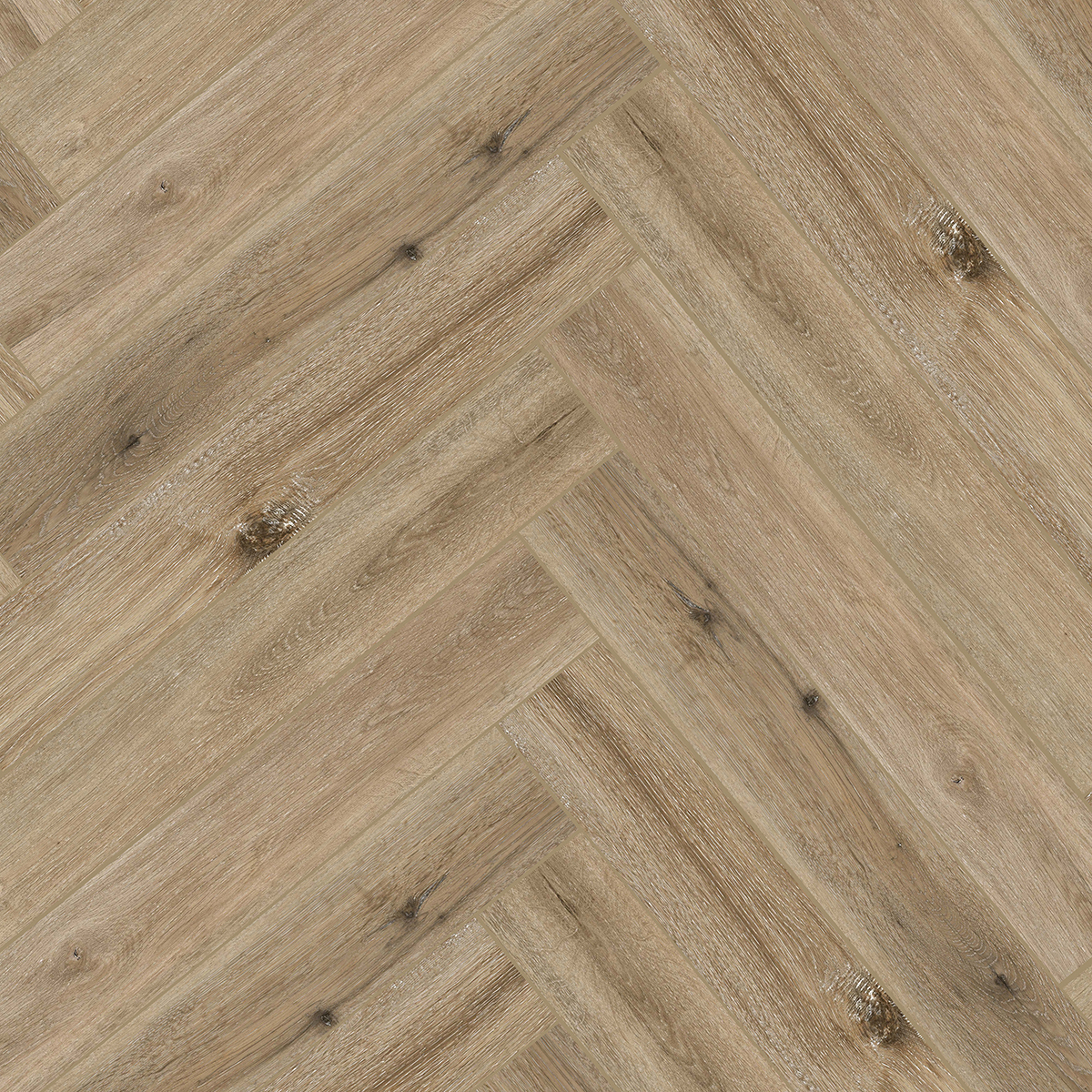
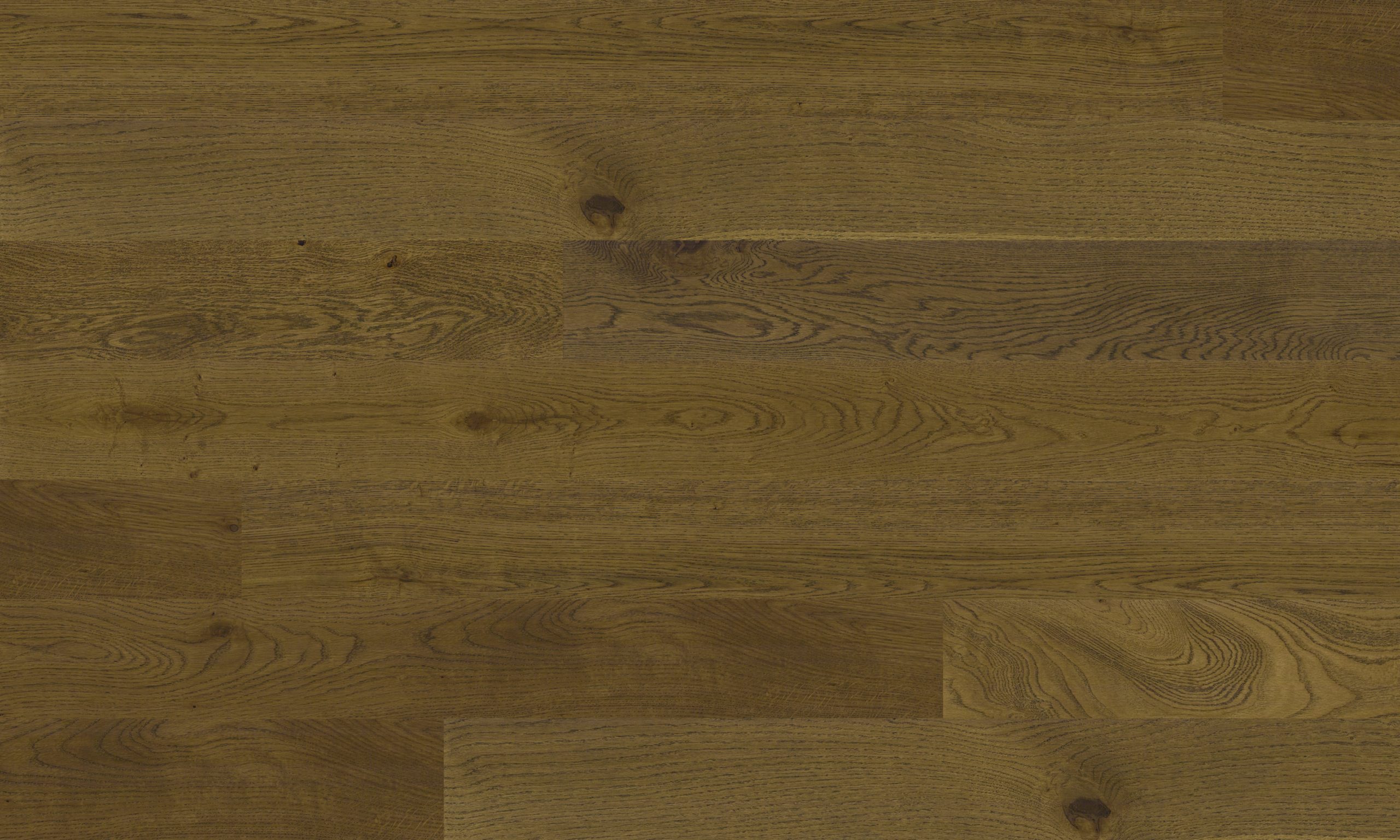
Tone-wise, you’ve got three broad directions. Pale, natural oaks give that relaxed Scandi feel and keep rooms feeling bright — it’s the way most of our customers are leaning right now, as our 2026 wood flooring trends confirm. Honey and mid tones are the warm, traditional heart of the style. And smoked or dark oaks? Pure drama — especially in a period setting.
Block size matters more than people expect. Smaller blocks (around 70–90mm wide) create a busier, more traditional pattern that suits compact rooms and older homes beautifully. Go larger (100–150mm) and the pattern turns bolder and more contemporary — perfect for generous, open spaces.
And the finish? Brushed-and-oiled floors celebrate texture and can be spot-repaired; lacquered floors are the wipe-clean workhorses for busy family life.
The best way to decide is to see the wood in your own light — browse our herringbone flooring collection and order a few free samples.
Let’s talk real numbers. For the boards themselves, expect £45–£90 per m² for quality engineered oak herringbone, depending on wear layer, block size and finish.
The bigger difference from plank flooring is the fitting. All that precision cutting and pattern alignment takes time and skill, so labour typically runs 30–40% higher than straight-lay — commonly £30–£50 per m² on top of your materials. It’s also worth allowing 5–10% more for cutting waste. Is it worth the premium? We’d say so — and so, usually, does your home’s resale value. For the full head-to-head, read our herringbone vs straight-lay comparison.
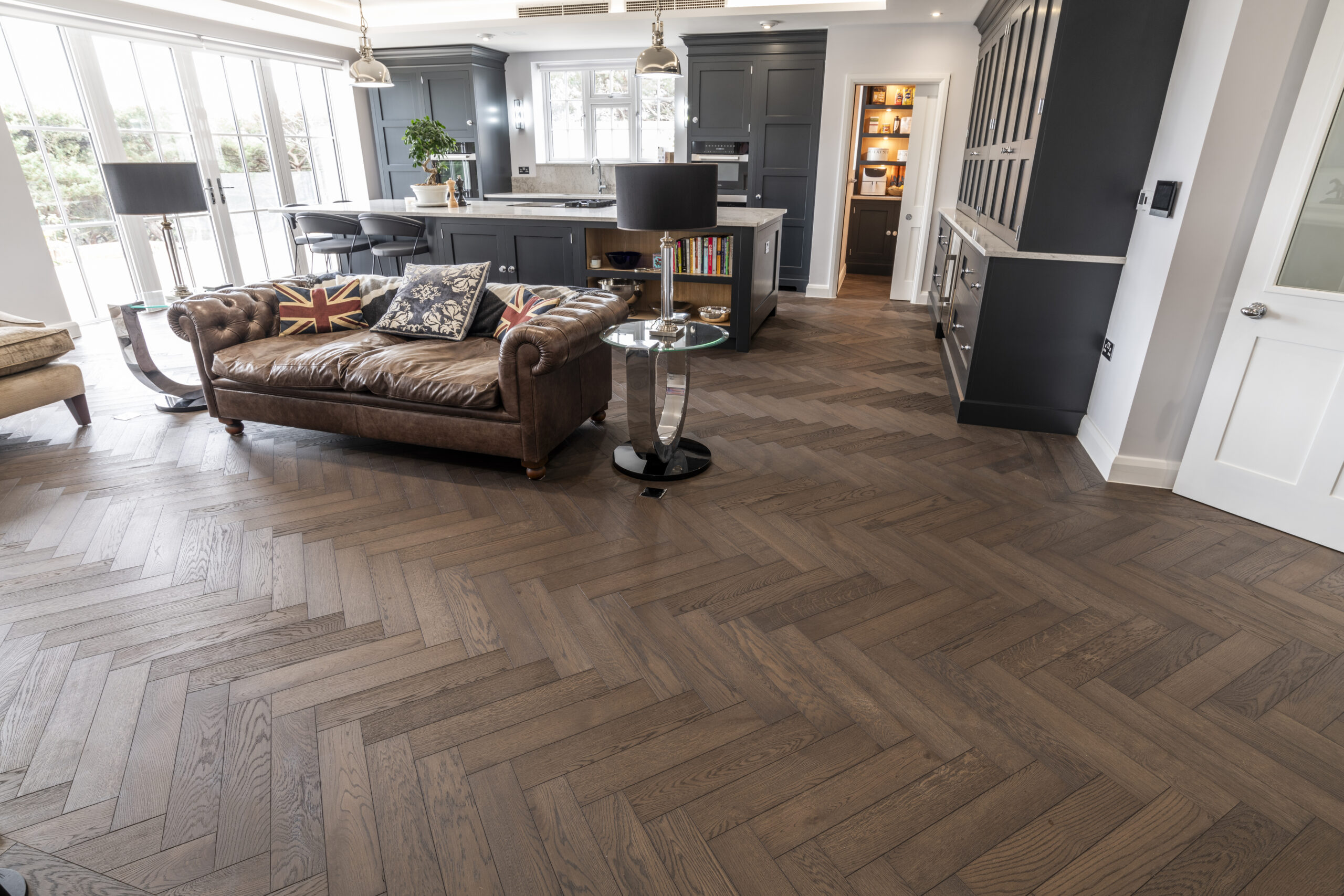
Honestly? Almost anywhere — but some rooms were made for it:
One honest caveat: in a very small room, a busy pattern can crowd the space. Smaller blocks and lighter tones help — or it may be a spot where straight-lay serves you better.
We won’t sugar-coat it: herringbone is a job for an experienced fitter, not a weekend DIY project. Blocks are laid from a centre line outwards and glued fully to the subfloor, with the border cuts around the room’s edge demanding the most skill. It takes noticeably longer than plank flooring — and the moment the last block goes in, you’ll know it was worth every hour. Our guide to laying engineered wood flooring covers the groundwork, from subfloor prep to acclimatisation.
The good news: for all its grandeur, herringbone asks for nothing special. A regular sweep, a well-wrung damp mop, felt pads under the furniture, and quick attention when the dog knocks over the water bowl. And because the surface is real oak, an engineered herringbone floor can be re-sanded when decades of family life eventually leave their mark. Here’s our full guide to cleaning an engineered wood floor.
Yes — but it’s the fitting, not the wood. Materials cost about the same; labour runs 30–40% higher and there’s a little more waste, so budget roughly 20–30% more overall.
Quite the opposite — it’s mid-revival. The difference this time round is where it’s turning up: kitchens, home offices and bedrooms, in paler, more relaxed tones than the formal parquet of old.
Herringbone blocks are rectangles meeting at 90°, giving a broken zigzag. Chevron planks are angle-cut so the rows meet in continuous points. Herringbone is the more traditional — and the more forgiving to fit.
Engineered herringbone, absolutely — it’s one of the best floors you can pair with UFH. Solid herringbone, generally not.
Explore our herringbone flooring collection, order your free samples, or drop into the showroom and talk patterns, tones and fitting with us — we’ll help you find the herringbone floor your home has been waiting for.